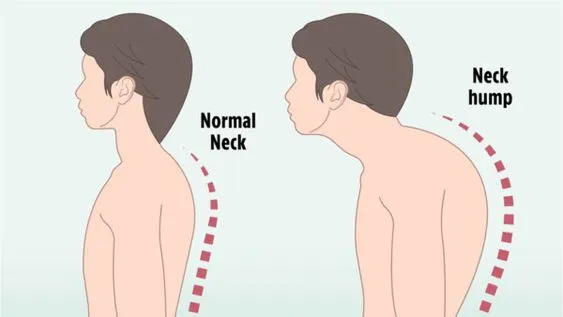

Daily Neck Hump Exercises for Better Posture and Less Pain are no longer a niche concern limited to office workers or older adults. We now see teenagers, athletes, parents, and professionals quietly struggling with a visible neck hump, stiff shoulders, and ongoing discomfort. Many people notice it in photos before they feel it physically, a subtle curve at the base of the neck that slowly becomes harder to ignore. Pain, tension headaches, shallow breathing, and self consciousness often follow. This guide focuses on Daily Neck Hump Exercises for Better Posture and Less Pain that fit into real life, not perfect routines that never get done.
Why a Neck Hump Develops Over Time
A neck hump, often linked with forward head posture, develops through repeated habits rather than sudden injury. Hours spent looking down at phones, leaning toward laptop screens, or driving with rounded shoulders place constant stress on the cervical spine. Over time, muscles in the front of the neck shorten while the upper back weakens. The body adapts to what it does most, even when that adaptation leads to discomfort.
We often hear people say their posture feels fine until the pain begins. By then, the imbalance has already settled in. Daily Neck Hump Exercises for Better Posture and Less Pain work because they address these imbalances consistently, not aggressively. Small corrections done daily send a message to the nervous system that a new alignment is safe and sustainable.
How Daily Neck Hump Exercises Help the Body Heal
The human body responds best to repetition and gentle load. Stretching once a week rarely changes posture, but short daily sessions can reshape how muscles support the spine. Daily Neck Hump Exercises for Better Posture and Less Pain target tight chest muscles, overworked neck extensors, and underactive upper back muscles. When these areas begin to cooperate again, posture improves naturally.
Pain relief often follows posture correction, not the other way around. As the head stacks more directly over the shoulders, strain on the neck joints reduces. Blood flow improves, breathing deepens, and many people report better sleep within weeks of consistent practice.
Before You Begin: Setting Realistic Expectations
Postural change is gradual. We encourage readers to approach Daily Neck Hump Exercises for Better Posture and Less Pain with patience rather than urgency. The neck hump did not appear overnight, and it will not disappear in a few days. What matters most is daily awareness and steady effort.
Mild muscle soreness is normal at first, but sharp pain is not. Exercises should feel corrective, not punishing. If you have a history of spinal injury, nerve symptoms, or medical conditions affecting bone density, professional guidance is recommended before starting any new routine.
Daily Neck Hump Exercises for Better Posture and Less Pain
The following exercises form a practical daily routine. Each movement serves a specific purpose and can be completed in about fifteen minutes total. Consistency matters more than intensity.
Chin Tucks Against the Wall
This exercise retrains the deep neck flexor muscles that hold the head in proper alignment. Stand with your back against a wall, heels a few inches away, shoulders relaxed. Gently draw your chin straight back as if making a double chin. Hold for five seconds and release.
We recommend ten slow repetitions. The movement should feel controlled and subtle. Chin tucks are foundational to Daily Neck Hump Exercises for Better Posture and Less Pain because they directly address forward head positioning.
Upper Back Squeeze
Many neck humps persist because the upper back lacks strength. Sit or stand tall and squeeze the shoulder blades together and slightly downward. Hold for six seconds, then relax.
This exercise improves endurance in the postural muscles between the shoulder blades. Perform twelve repetitions. Over time, maintaining upright posture will feel less like effort and more like default alignment.
Chest Opener Stretch
Tight chest muscles pull the shoulders forward, worsening the neck hump. Stand in a doorway and place your forearms on either side of the frame. Step forward gently until you feel a stretch across the chest.
Hold for twenty seconds and repeat twice. This stretch pairs well with strengthening movements and supports the goals of Daily Neck Hump Exercises for Better Posture and Less Pain.
Neck Extension Mobility
Careful neck extension restores movement that is often lost with constant downward gaze. Sit upright and slowly look upward toward the ceiling without compressing the lower back. Pause briefly, then return to neutral.
Eight controlled repetitions are enough. Avoid forcing the range. Smooth motion matters more than how far you move.
Seated Thoracic Rotation
Upper back stiffness can lock the neck into poor alignment. Sit on a chair with arms crossed over your chest. Rotate your torso to one side while keeping the hips facing forward. Return to center and repeat on the other side.
Complete ten rotations per side. Improved thoracic mobility reduces strain on the neck and supports lasting posture correction.
How to Fit These Exercises Into a Busy Day
One reason Daily Neck Hump Exercises for Better Posture and Less Pain fail for many people is unrealistic scheduling. We encourage attaching these movements to existing habits. Chin tucks can be done during screen breaks. Chest stretches fit easily into morning routines. Upper back squeezes can be practiced while waiting in line or sitting at a red light.
Short, frequent reminders work better than long sessions that get skipped. Even five focused minutes twice a day can create meaningful change when practiced consistently.
Common Mistakes That Slow Progress
We see several patterns that prevent improvement. Awareness of these issues can save months of frustration.
- Overstretching the neck without strengthening the upper back
- Performing exercises quickly without control
- Ignoring workstation and phone ergonomics
- Expecting pain relief before posture improves
Daily Neck Hump Exercises for Better Posture and Less Pain work best when paired with small posture adjustments throughout the day. Exercise alone cannot counter ten hours of slouched sitting.
Emotional Impact of Improving Posture
Posture affects more than physical comfort. Many readers describe feeling more confident, alert, and calm as their alignment improves. Standing taller changes how we breathe and how we present ourselves socially. It can even influence mood during stressful situations.
There is something quietly empowering about reclaiming control over your own body through Daily Neck Hump Exercises for Better Posture and Less Pain. Progress may be slow, but each small change reinforces a sense of agency and self respect.
How Long Until Results Appear
Most people notice reduced tension and stiffness within two to three weeks. Visible posture changes often take six to twelve weeks depending on consistency and starting point. Pain reduction usually follows improved alignment rather than preceding it.
Photographs taken from the side can be helpful for tracking progress. The goal is not perfection but steady improvement that feels sustainable.
Supporting Habits That Improve Results
Daily Neck Hump Exercises for Better Posture and Less Pain are most effective when supported by mindful daily habits. Adjust screen height so your eyes meet the top third of the display. Hold phones closer to eye level. Take brief posture resets every thirty minutes.
Sleep position also matters. A pillow that keeps the neck neutral rather than flexed forward can make a noticeable difference over time.
Conclusion
Daily Neck Hump Exercises for Better Posture and Less Pain offer a practical path toward lasting comfort and confidence. By addressing the muscular imbalances that cause forward head posture, these exercises help reduce pain, improve alignment, and support long term spinal health. The process requires patience, honesty, and daily attention, but the rewards extend far beyond physical appearance. With consistent effort, Daily Neck Hump Exercises for Better Posture and Less Pain can become a simple daily practice that restores balance, ease, and control to everyday movement.